
Broken Oath vs Path of Exile — The Original Benchmark
Broken Oath vs Path of Exile (PoE 1): build depth, endgame, offline play and the time each asks. PoE 1 facts checked 7 Nov 2026; Broken Oath unreleased.
Broken Oath is unreleased. Its side of every table can change; competitor facts are checked against official sources.
Independent editorial comparison. We have not played Broken Oath; its side uses public sources only. Competitor facts are checked against official sources; no scores, no winner. Sources.
The 30-second answer
Path of Exile 1 is a released, free, always-online ARPG from 2013. Broken Oath is an unreleased single-player ARPG in Steam playtest with no date or price.
PoE 1 has the documented build depth today: seven classes, 21 ascendancies listed, itemised gems with up to five supports and one shared passive tree.
Broken Oath's case is offline characters, six classes and a smaller loop. Its trade, seasons and endgame depth are unannounced, so the comparison stops where the facts do.
At a glance
| Broken Oath | The other game | |
|---|---|---|
| Release status | ◐ Playtest live since 30 Oct 2026; Early Access undated | ✓ Released 23 Oct 2013; 3.30 on 13 Nov 2026 |
| Price / model | — Not announced — no price listed | Free-to-play; cosmetics, supporter packs, stash tabs |
| Platform | Windows 10/11 64-bit (Steam) | Windows, macOS, Xbox, PlayStation |
| Players | ✓ Single-player (Steam) | Online only; solo or party; Solo Self-Found available |
| Camera | Isometric / top-down (official screenshots) | Isometric |
| Classes | Six: Warrior, Mage, Ranger, Samurai, Paladin, Necromancer | Seven classes; 21 ascendancies listed, three per class |
| Skill customization | ✓ Skill gems with linkable support gems that change behaviour | ✓ Skill gems socketed in gear; up to five supports per skill |
| Passive / build layer | ✓ Passive tree with notables and keystones; Blessings and Curses | ✓ One shared tree, seven start points; keystones, masteries, jewels; separate Atlas tree |
| Crafting | ✓ Forge: rune stones, learned recipes, added mods, reforges, mastery | ✓ Orb currency crafting, crafting bench, league-specific crafting |
| Endgame loop | ◐ Ruptures: randomised maps, eight danger bands, Guardians | ✓ Atlas of Worlds: 100+ maps, Atlas passive tree; 3.30 rebuild announced |
| Loot chase | ✓ Magic, rare, red unique, Primal chase tier | ✓ Magic, rare, unique, orb currency; 3.30 loot rework announced |
| Offline | ✓ Offline characters exist; 5 Nov news kept offline untouched | × No — broadband required, always online |
| Controller / Steam Deck | ◐ Controller support in progress; Deck planned for Early Access | ◐ Full controller support; Steam Deck "Playable" |
| Trade / monetization | — Not announced | Online item economy; first-party trade search and bulk exchange |
| Seasons / wipes | — Not announced | ✓ Challenge leagues with fresh economies; Standard, Hardcore, SSF, private leagues |
| Mods / PvP | — Not announced | ◐ No official mod support or Workshop; PvP and ladder races |
Checked 2026-11-07 · Broken Oath: confirmed/observed · Path of Exile: official sources
What each game is
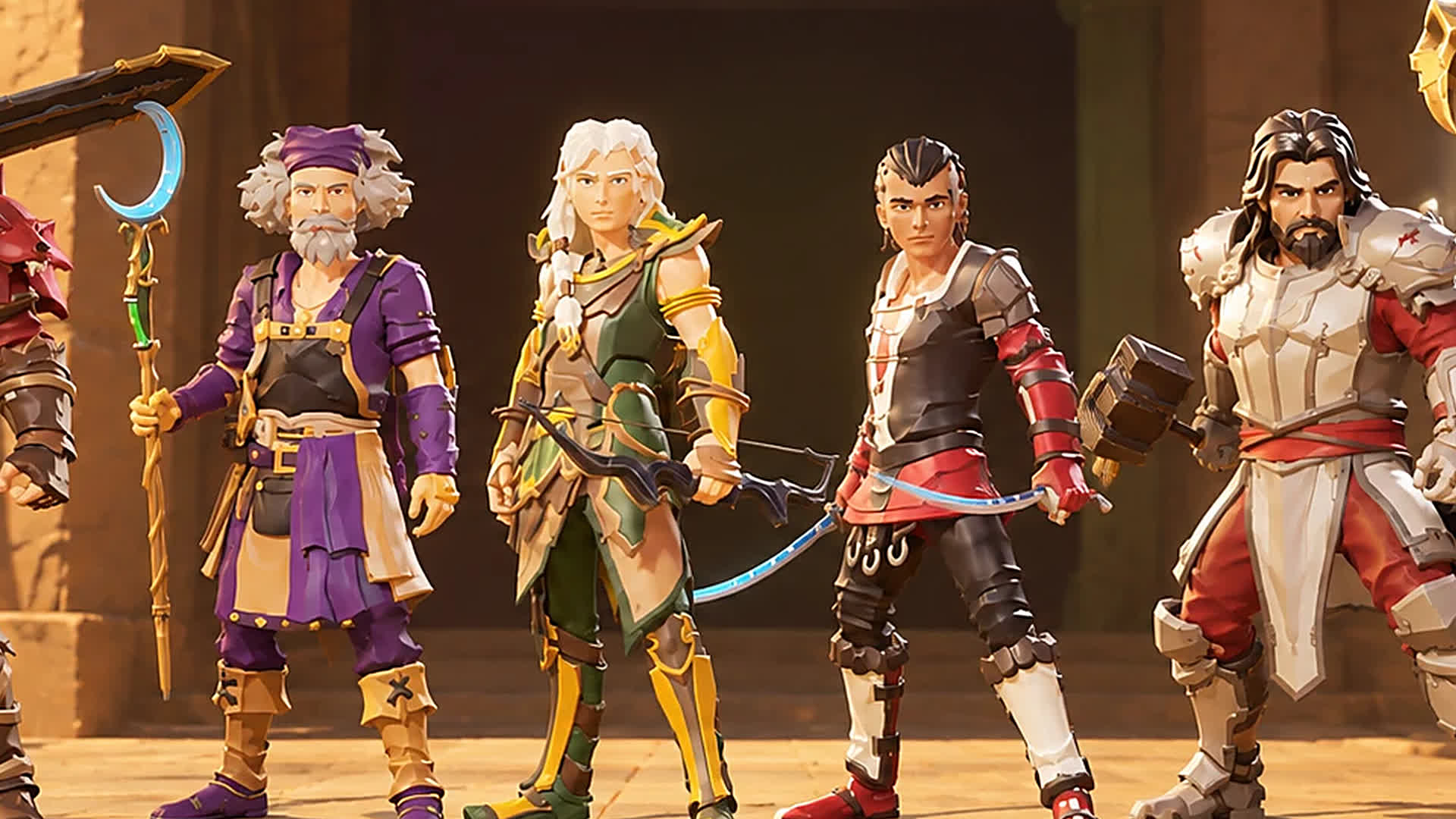
Broken Oath (Steam app 5452900) is a single-player action RPG from Crater Studios, set in the Dwarven Realms universe. It has six classes — Warrior, Mage, Ranger, Samurai, Paladin and Necromancer — and it is not out. A Steam playtest has run since 30 October 2026; Early Access is estimated at six to twelve months, with neither a date nor a price announced.
Path of Exile (Steam app 238960) is Grinding Gear Games' free-to-play, always-online action RPG, first released on 23 October 2013. On 7 November 2026 the live version was 3.29, Curse of the Allflame. The 3.30 expansion, Covens of Umbra, is announced for 13 November 2026; it was not live at check time.
The practical difference is scope. PoE 1 is a released, continuously updated online game with thirteen years of systems folded into it. Broken Oath is a playtest build with a confirmed skeleton — six classes, skill gems and supports, a passive tree, a Forge, Ruptures — and a long list of unannounced details. Compare the designs, not the maturity.
The build layer
PoE 1 treats skills as items. A gem grants an ability, sits in a socket in your gear, and linked sockets decide how many support gems can modify it — up to five. Supports change behaviour: a fireball can chain or split. Since 3.29 any gem fits any socket colour, sockets default to white, and matching colour grants a 10% gem-quality bonus. Seven classes share one passive tree with seven starting locations, plus keystones, masteries and jewel sockets; 21 ascendancies are listed, three per class. Crafting runs on orb currency that rerolls item properties, a crafting bench and league-specific systems.
Broken Oath uses the same vocabulary at a smaller scale. Six classes, skill gems with linkable supports that change how a skill works — the store's examples are a Cyclone that fires Ember Bolts while channelling, a burning legion, and arrows raining in a chosen element. A passive tree with notables and keystones; the observed build screen charges 2 gold per refunded node. Blessings and Curses add a second layer: Vows for power, Woe on a pack. The Forge uses rune stones found in each land and recipes learned from Edda Ironhand.
The honest comparison is known versus unknown. PoE 1's build space is documented down to gem tags. Broken Oath has the right nouns — links, supports, keystones, crafting — but not the numbers. Link limits, gem lists and respec costs at scale are unpublished. So is whether supports trade power for behaviour. One creator calls the Forge deterministic, in the Last Epoch sense; that is a player's read, not a studio statement.
The endgame and the time ask
PoE 1's endgame is the Atlas of Worlds: more than a hundred high-level maps, a separate Atlas passive tree, and a league mechanic folded into the map device. 3.30 rebuilds that tree and replaces Scarabs with Threads of Creation — announced, not live on 7 November. Each challenge league starts on a fresh economy, with Standard, Hardcore and Solo Self-Found variants; 3.29 shipped 40 challenges plus 8 Ruthless ones. A league is a project: replay the campaign, rebuild the character, re-enter the Atlas. The 2026 cadence has been roughly every three to five months.
Always-online is structural. Steam lists a broadband connection as a requirement for both Windows and macOS, and there is no offline mode. Trade is first-party: item search, bulk trading and a currency exchange. Stash tabs are the optional purchase that matters in daily play.
Broken Oath's loop is the Rupture: randomised maps across forests, deserts, snow peaks, swamps and the Underrealm, with weather, time of day, eight danger bands and Guardians with new attacks and phases. The observed panel shows three lives, checkpoints, a timer, rares remaining and objectives such as breaking a seal. Loot tiers are magic, rare, red unique and Primal. The 5 November news post separates online and offline characters — online heroes were reset for a rebuild, offline was untouched — which is the clearest structural difference between the two. What a Rupture costs in time, and whether there is a season or reset model, is not announced.
Where Broken Oath has to prove itself
PoE 1 is neither a low bar nor an untroubled one. Its onboarding is a cliff, its campaign is compulsory each league, its balance moves under builds every few months, and its engine dates from 2013. Those are the openings.
- A build loop that survives the endgame. Six classes and a support system are a start; PoE 1's advantage is that its dials keep interacting after the campaign. Broken Oath needs that interaction, not just the vocabulary.
- An endgame with a reason to repeat it. Ruptures have modifiers, objectives, danger bands and Guardians; the Atlas has its own tree and a league economy behind it. Breadth is not required on day one; a clear ladder is.
- A launch state. A playtest reset and an online rebuild are normal in alpha. They are also the reason to hold judgement until an Early Access build is purchasable.
- The roadmap: full controller support, Steam Deck, more skills, more uniques, a deeper Forge. All are Early Access commitments; none is complete.
- A price and a date. Until both exist, this is a shipped game against a design document with a playable slice.
What Broken Oath does not have to prove is that it can be smaller. A single-player ARPG with offline characters, six classes and a map loop is a coherent product. It only has to be honest about which parts are finished.
Who should play which
Pick Broken Oath if…
- Offline single-player is a hard requirement, not a preference — the alpha's 5 November update left offline characters untouched while online heroes were reset.
- You want a build game with fewer moving parts: six classes, gems with behaviour-changing supports, a tree with notables and keystones, and a Forge with learned recipes.
- You are willing to play an alpha and start over: the playtest has already reset online heroes, and Early Access is undated.
- You prefer a self-contained map loop — Rupture, modifiers, objectives, a Guardian — over a trade economy and a ladder.
- You want to watch the systems settle before buying, rather than buy a released game today.
Pick Path of Exile if…
- You want one of the deepest documented build spaces in the genre and will read a wiki to use it.
- A fresh league economy, a ladder and a first-party trade site are the point, not an obstacle.
- You are fine with always-online play and a campaign replay every few months.
- You want a free game with no box price and a regular update cadence.
- You want controller support and a shipped, thirteen-year-old game whose systems are already mapped.
The honest verdict
These are not two answers to the same question. PoE 1 is a live service with a trade economy, a ladder and a decade of endgame systems stacked on one another. Broken Oath is a single-player playtest with offline characters and a smaller, cleaner loop. One is released and free; the other is unpriced, undated and still changing between builds.
If you want one of the deepest build games available today, and you do not mind broadband, a league reset and a wiki open in another tab, PoE 1 is the obvious pick. 3.30 on 13 November is a reasonable entry point, though it is announced rather than live on the date of this page. Broken Oath cannot answer that case yet, because its gem list, link rules and endgame depth are unpublished.
If offline single-player is the requirement, the calculation flips. PoE 1 has no offline mode at all; Broken Oath has offline characters in alpha and Steam lists it as single-player. That is a real difference, not a marketing one. Wait for a date, a price and an Early Access build before treating it as the replacement. If you need something to play tonight, play PoE 1; if you are waiting specifically for an offline ARPG, wait for Broken Oath.
Watch alongside
 17:59 Broken Oath
Broken Oath – Addicting, Promising, and Fun New ARPG
A chaptered first impression that walks items, skills, the passive tree and crafting in one pass — the quickest way to see whether the loop reads as an ARPG you want.
 34:38 Path of Exile
Path of Exile for Complete Noobs
An evergreen fundamentals explainer for PoE 1; it predates 3.29 and 3.30, so use it for the shape of the game, not current builds.
Frequently asked questions
Is Broken Oath like Path of Exile?
Is Broken Oath out yet, and is it free?
Which is better for offline play?
Which has deeper builds and more endgame?
Does Broken Oath have trade, seasons or co-op?
Should I play PoE 1 while waiting for Broken Oath?
Sources
- Broken Oath — Steam store — official store; classes, gem system, Early Access estimate, price and date not listed, checked 2026-11-06
- Broken Oath — Steam news, 5 November 2026 — online rebuild; offline characters untouched, checked 2026-11-06
- Path of Exile — Steam store — release date, free-to-play, platforms, broadband requirement, controller support, store media, no Workshop, checked 2026-11-07
- Path of Exile — official game overview — gems and supports, shared tree, leagues, PvP, trade, shop, console labels, checked 2026-11-07
- Path of Exile — Ascendancy Classes — 21 ascendancies listed; the page summary still says 20, checked 2026-11-07
- Path of Exile — Content Update 3.29.0 patch notes — league variants, 40 challenges, socket change, crafting, Currency Exchange, checked 2026-11-07
- Path of Exile — Steam news: Covens of Umbra, 6 November 2026 — official post dated 2026-11-06; 13 Nov launch, Atlas overhaul, Threads of Creation, checked 2026-11-07
- Steam Deck compatibility — Path of Exile — "Playable", with small interface text flagged, checked 2026-11-07